Living with a reactive dog: finding support for yourself
 Sonia Catherall

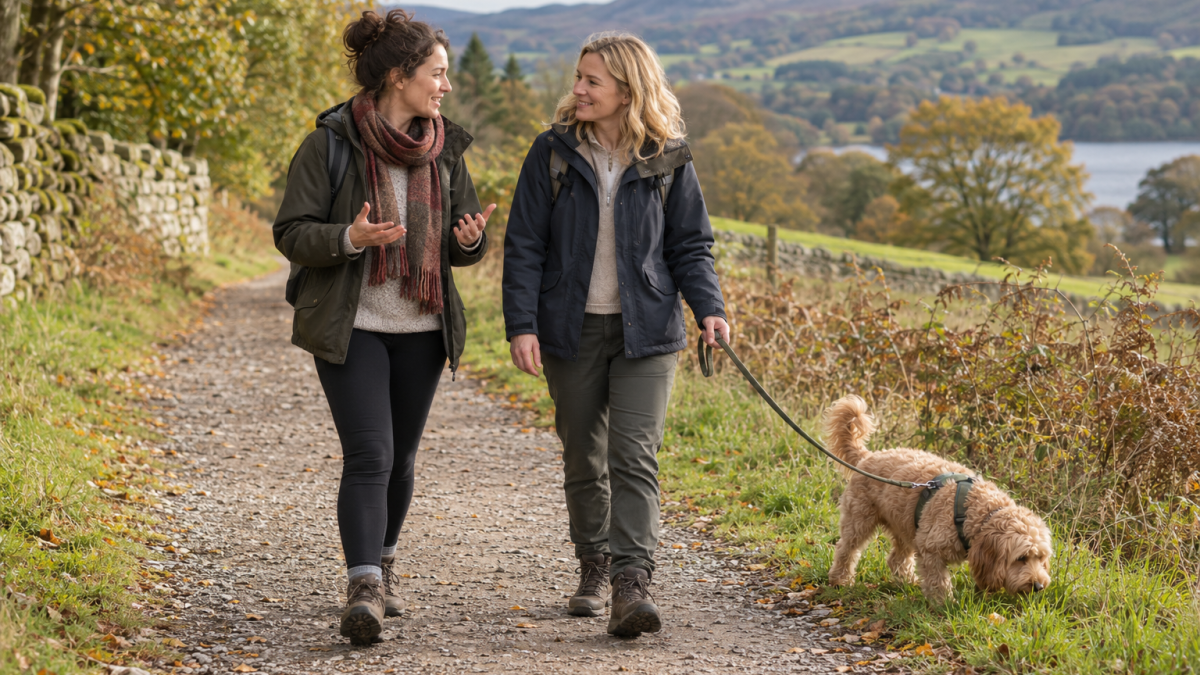
If your dog barks or lunges at other dogs, people or passing traffic, you may have searched for help with a “reactive dog”. You’ll find plenty of advice about training, equipment and what to do on walks. But you might also be looking for someone who understands what everyday life feels like for you.
Perhaps you’re tired of explaining why your dog needs space. You would like some company on a walk without worrying about keeping up. Or you want to talk about a difficult morning without being told what you should have done.
Having people around you who understand can make such a difference.
.
When other people don’t understand your dog’s needs
When you live with a dog who finds certain situations difficult, everyday plans can take some thought. Where will you walk? Is it likely to be busy? Can you leave easily if your dog is uncomfortable?
It can be frustrating when someone dismisses those considerations.
Perhaps a friend encourages you to bring your dog somewhere you know they will find difficult. Or a visitor approaches your dog, trying to stroke them or get their attention, when you have explained that they need time and space.
They may mean well, but you’re left supporting your dog while also trying to explain your decisions. You might feel awkward about speaking up, especially if it means changing plans.
I really appreciate people who remember what helps Harry and do their best to support us. Being able to change direction, stop while he sniffs or choose a different route without a fuss makes walks so much more enjoyable.
People don’t need to know everything about canine behaviour to help. Being willing to listen and respect your decisions makes a big difference.
.
Explain what would help in practical terms
“Please give my dog space” may feel clear to you, but someone else might not know what you’re asking them to do. A specific request can make it easier.
Before a walk, you could say:
“I would love you to join us. We might need to change our route or head home early, depending on how my dog is feeling.”
Before visitors arrive:
“Please let them come to you in their own time, without approaching or calling them over. If they come for a sniff, just let them sniff without trying to stroke or interact with them.”
When making plans:
“I would love to meet up, but that café won’t suit my dog. Could we choose somewhere quieter, or arrange a time when I can come without them?”
It can help to have these conversations beforehand, when you have time to explain. If you need to make a decision in the moment, “We’re going to cross over here to give them more space” may be all you need to say.
.
Sometimes you need someone to listen
After a difficult walk, you might want to talk about what happened without being given a list of things to try. You may already be working with a professional and following recommendations suited to your dog.
It’s fine to say:
“Can I tell you about our walk? I don’t need advice, I’d just like to talk about it.”
Other days, you might want help thinking through a situation or deciding what to ask your behaviourist at your next appointment. Letting someone know what you need can make the conversation more useful.
There’s room to share the lovely experiences too. Perhaps your dog enjoyed exploring somewhere new, rested comfortably while you had a visitor or spent a walk investigating every interesting smell along the way.
It’s good to share those moments with someone who knows your dog and understands why they meant so much to you.
.
Think about who you enjoy walking with
Who is happy to stop while your dog sniffs? Who understands when you need to change direction? Who enjoys your company without expecting the walk to go a particular way?
You might notice that you make different decisions when walking with certain people. Perhaps you carry on when you would usually turn back, or get closer to another dog than you feel comfortable with because you don’t want to seem awkward.
If walking together regularly leaves you feeling rushed or uncomfortable, you can suggest a different arrangement. A quieter route, a shorter walk or meeting without your dog might work better.
You can value someone’s friendship and still find that walking your dogs together isn’t enjoyable.
.
Build a support network that works for you
Your support network might include friends, family, your veterinary team, a qualified trainer or behaviourist, and other guardians with similar experiences.
Different people may offer different kinds of help. One friend might be lovely company on a quiet walk. A family member your dog enjoys spending time with might look after them so you can have an afternoon out.
Your behaviourist can help you understand your dog’s behaviour and work with you to find ways to make everyday life easier for you both.
You don’t need to find one person who can offer everything. It can help to think about what would make everyday life easier, then consider who you could ask.
That might be company, practical help, professional guidance or simply someone who checks in and asks how you both are.
.
Finding a supportive community for you and your dog
Connecting with other guardians can be reassuring, particularly when they recognise experiences you’ve found difficult to explain elsewhere.
Before joining a group, have a look at how people respond to questions. Look for somewhere you can talk about difficult days without feeling judged, where people listen and take the time to get to know you and your dog.
A helpful community gives you somewhere to learn and share experiences without feeling pressured to do everything someone else is doing.
Remember, too, that similar-looking behaviour can have different explanations. Another guardian’s experience may be useful, but advice in a group cannot replace an individual assessment when your dog needs professional support.
.
Join us in The Hub
If you would appreciate some help and guidance with your dog, that’s what The Hub is here for.
You can ask me questions, talk through something you’re finding difficult and get support from me as a Clinical Animal Behaviourist. Our regular conversations give me time to get to know you and your dog, rather than offering general advice that may not suit you.
There are courses and activities too, alongside a friendly, supportive community where you can share experiences without feeling judged.